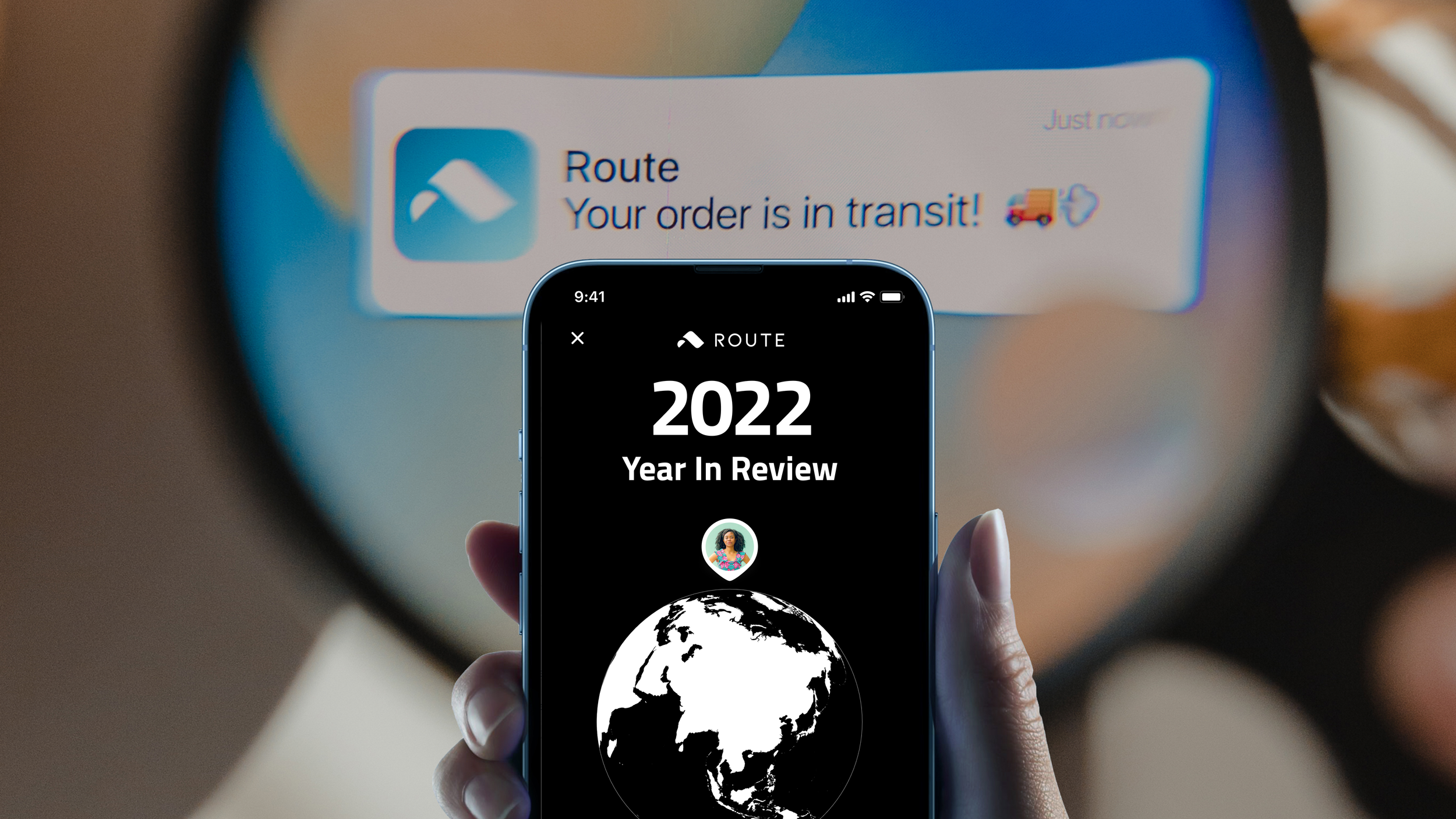
Route’s Year In Review - From Passive Tracking to Viral Social Sharing
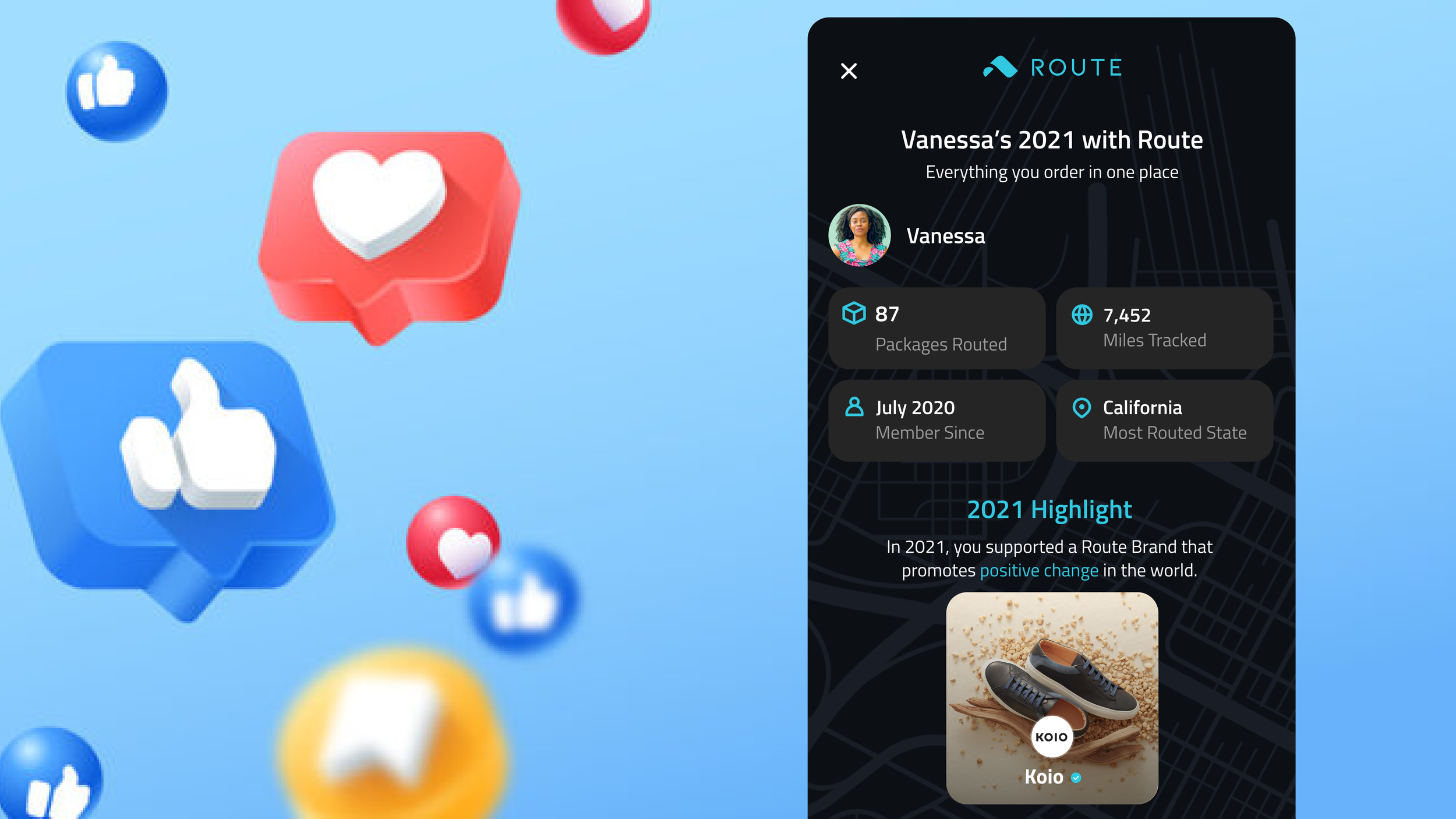
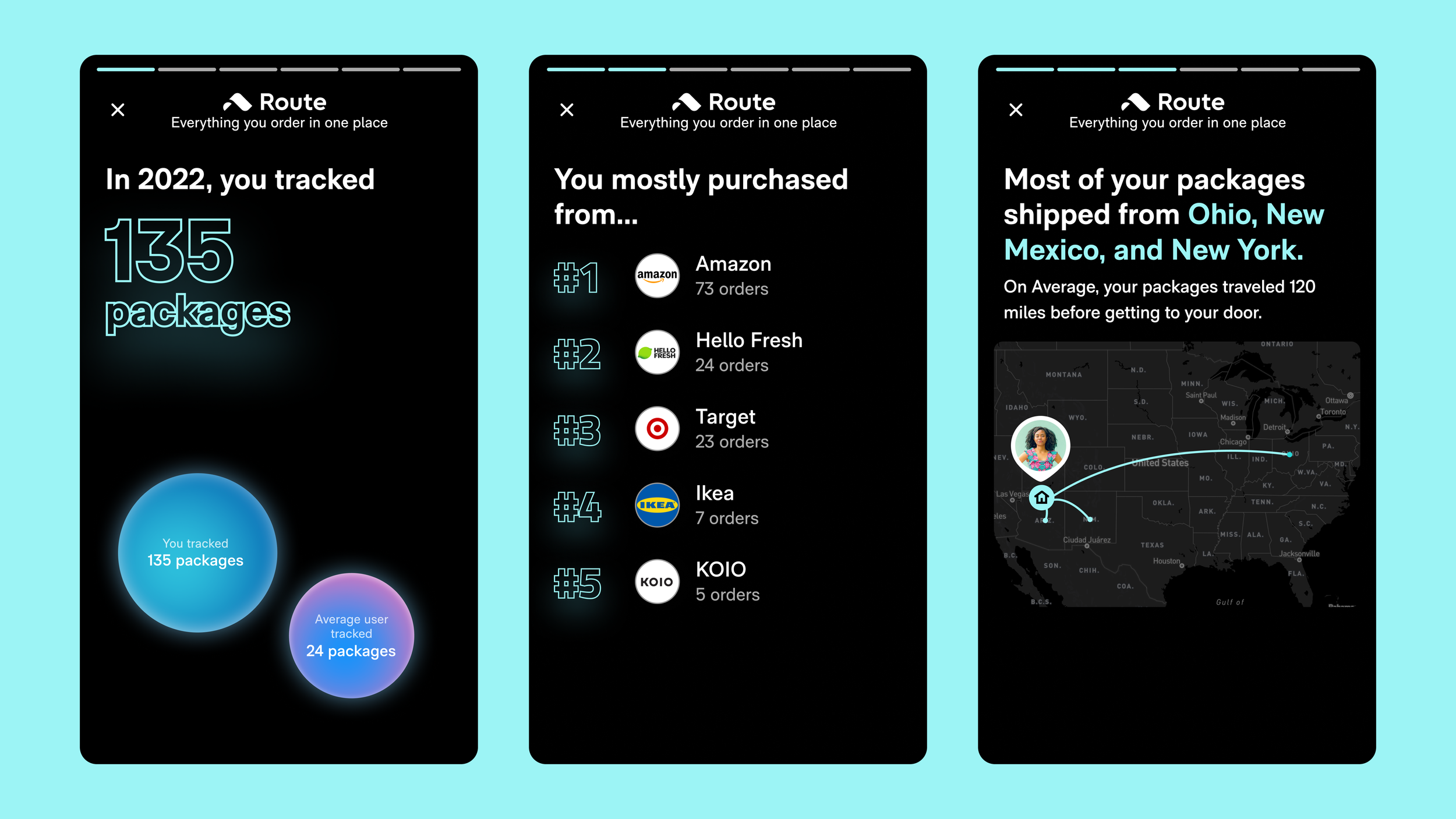
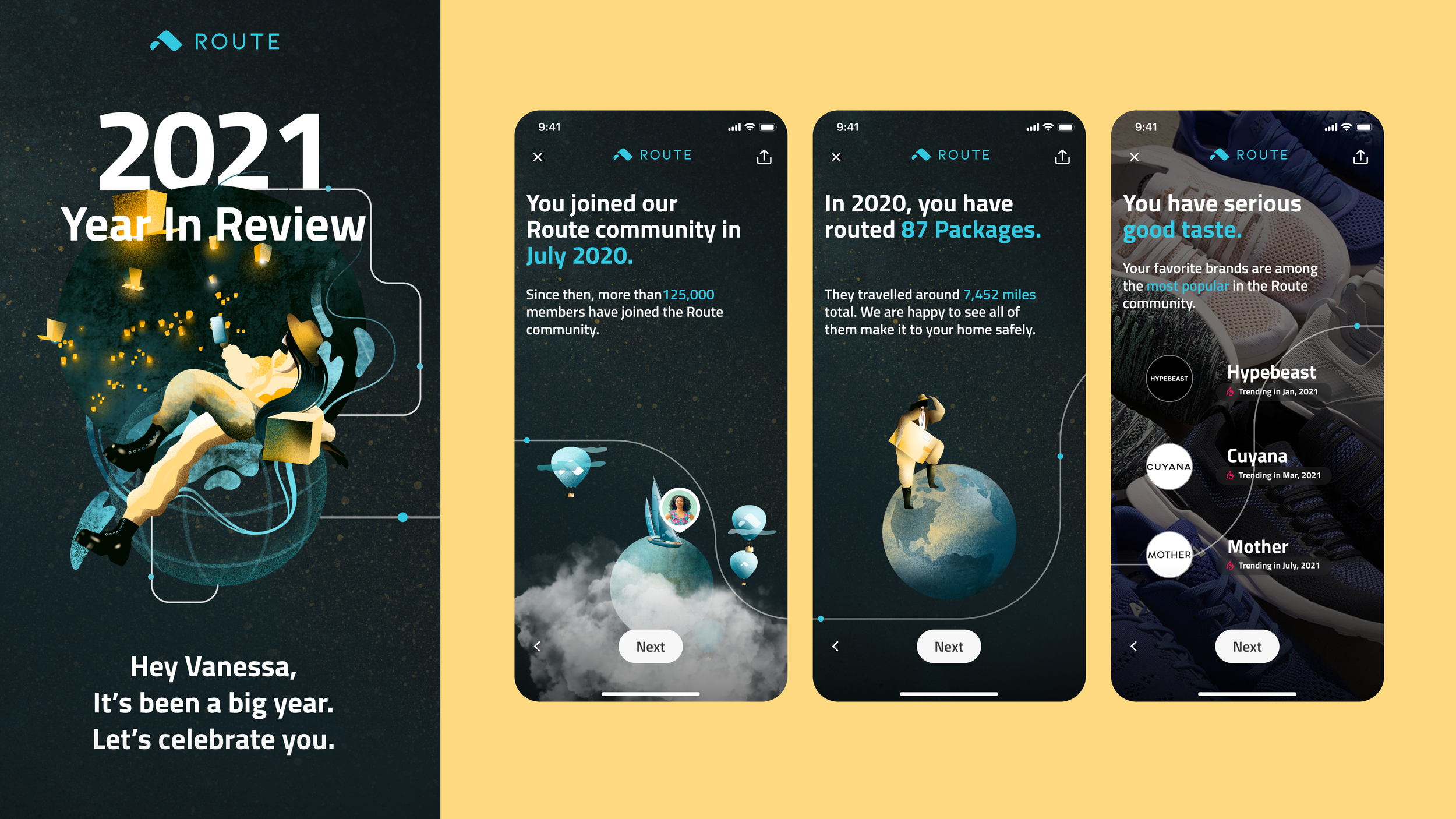
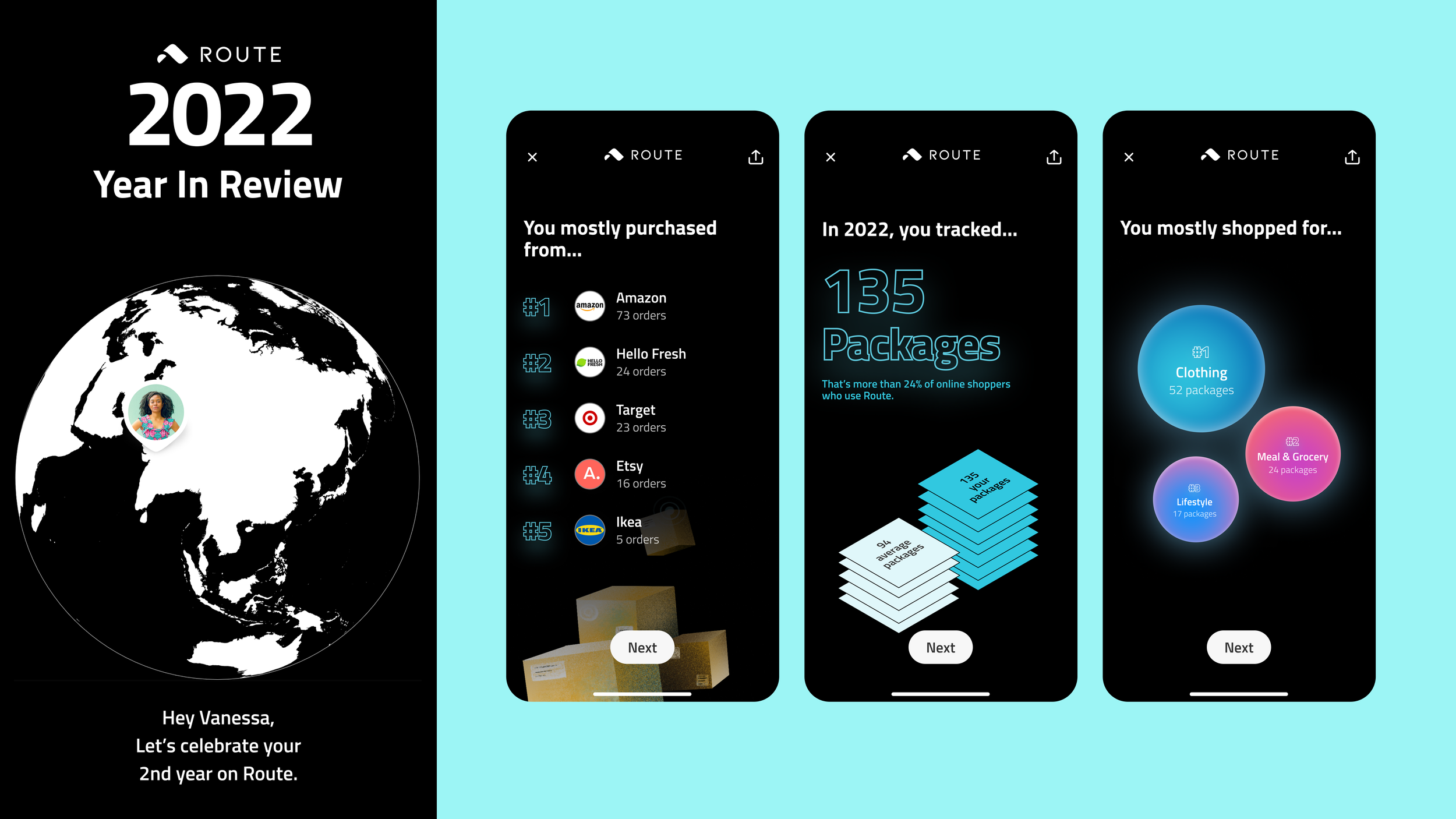
In 2022 and 2023, I led and shipped Route’s End of Year In Review for 2021 and 2022 — a Spotify-Wrapped-inspired experience that transformed dormant tracking data into a delightful sharable moment
Role Senior Product Designer
Team: PM · iOS & Android Engineers · Data scientist · Customer Experience · Design Manager · Lifecycle Marketing
Timeline: 3 weeks
Tools: Figma, Origami (Prototype), Adobe AfterEffects (Animation), Lottie (Animation), Zoom (User Interviews & Testing)
25K+
Unique shares YoY
+75%
In-app social sharing
Context
Route attracts a solid user base - once a user tracks their first package from a Route Merchant partners, they are more likely keep tracking almost ALL packages using Route. However, most users only open the app only for active tracking. Merchant partners still needed exposure, and our social sharing events are very small.
It was clear from our App store reviews & app surveys, many users saw Route as “just a tracking app”, and did not see further value from Route.
From Zero to One
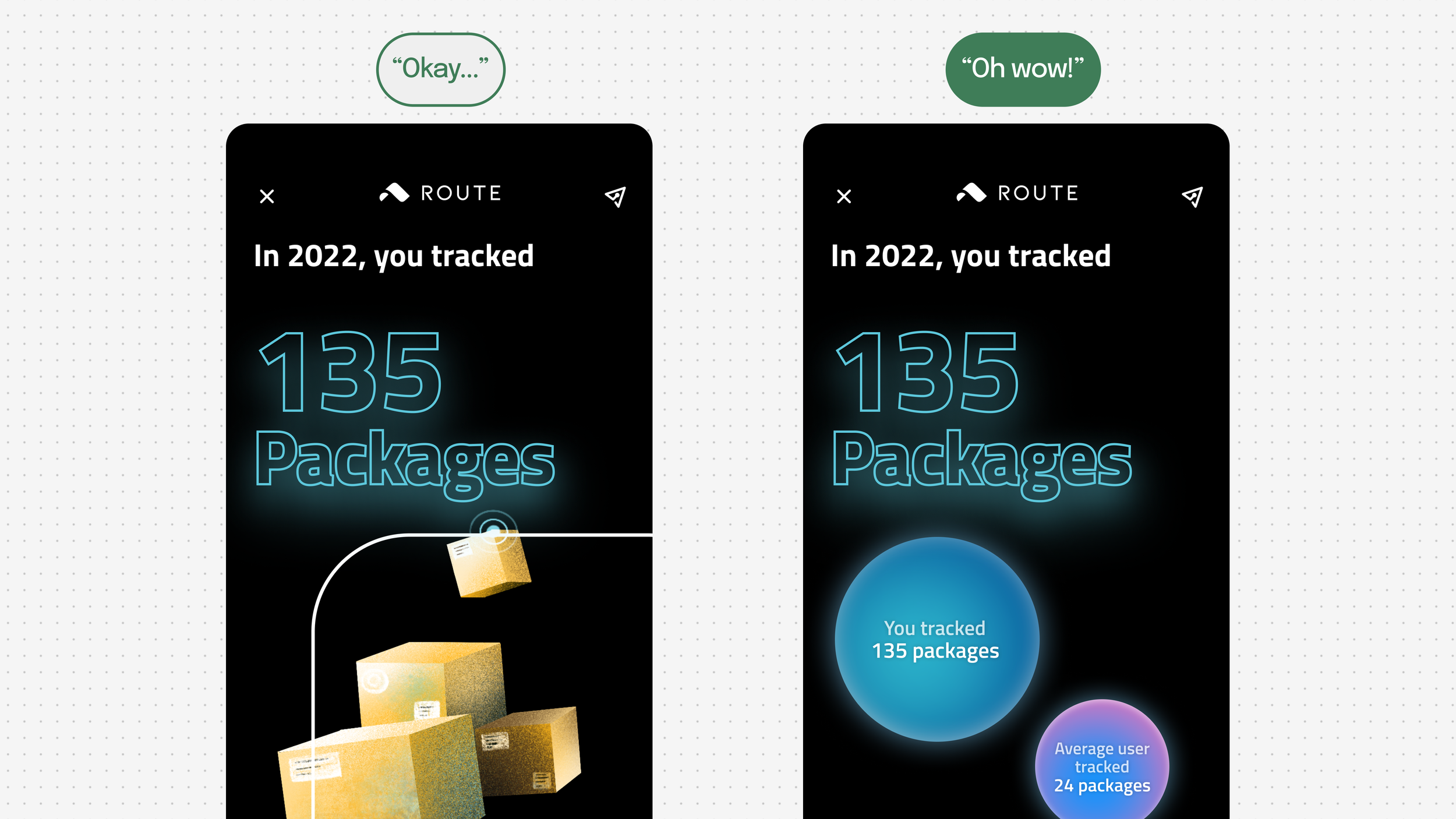
Leadership asked: How might we turn invisible behavioral data into a celebratory, shareable moment that is optimized for social sharing?
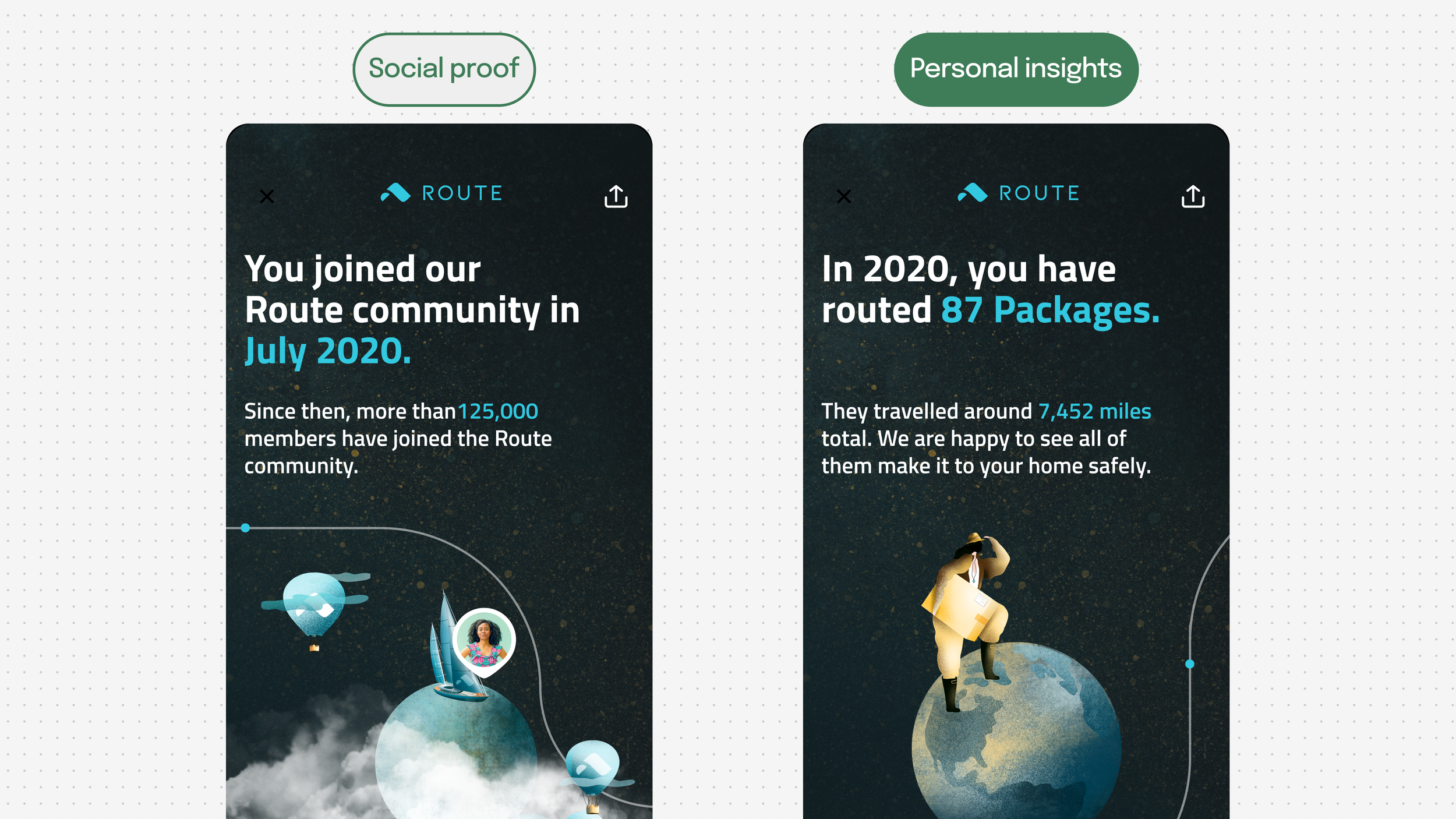
My Answer: Route customers didn’t see the data they generated, the brands they supported, the habits they formed, etc.,. The value existed. It just wasn’t visible.
Together, we turned to Spotify - a rockstar in this space with its “Spotify Wrapped” feature every year. It is built for insights, but designed for sharing. “Route - Year in Review” was born.
A design led project from concept to launch
With a heavy focus on scope and feasibility, I aligned Growth, Shop, Merchant Partner, Data, Customer Experience, and Lifecycle Marketing teams around a shared opportunity. I collaborated with each stakeholder, pouring over audience segmentation, data feasibility, and success metrics. Together, I co-authored the PRD with the PM.
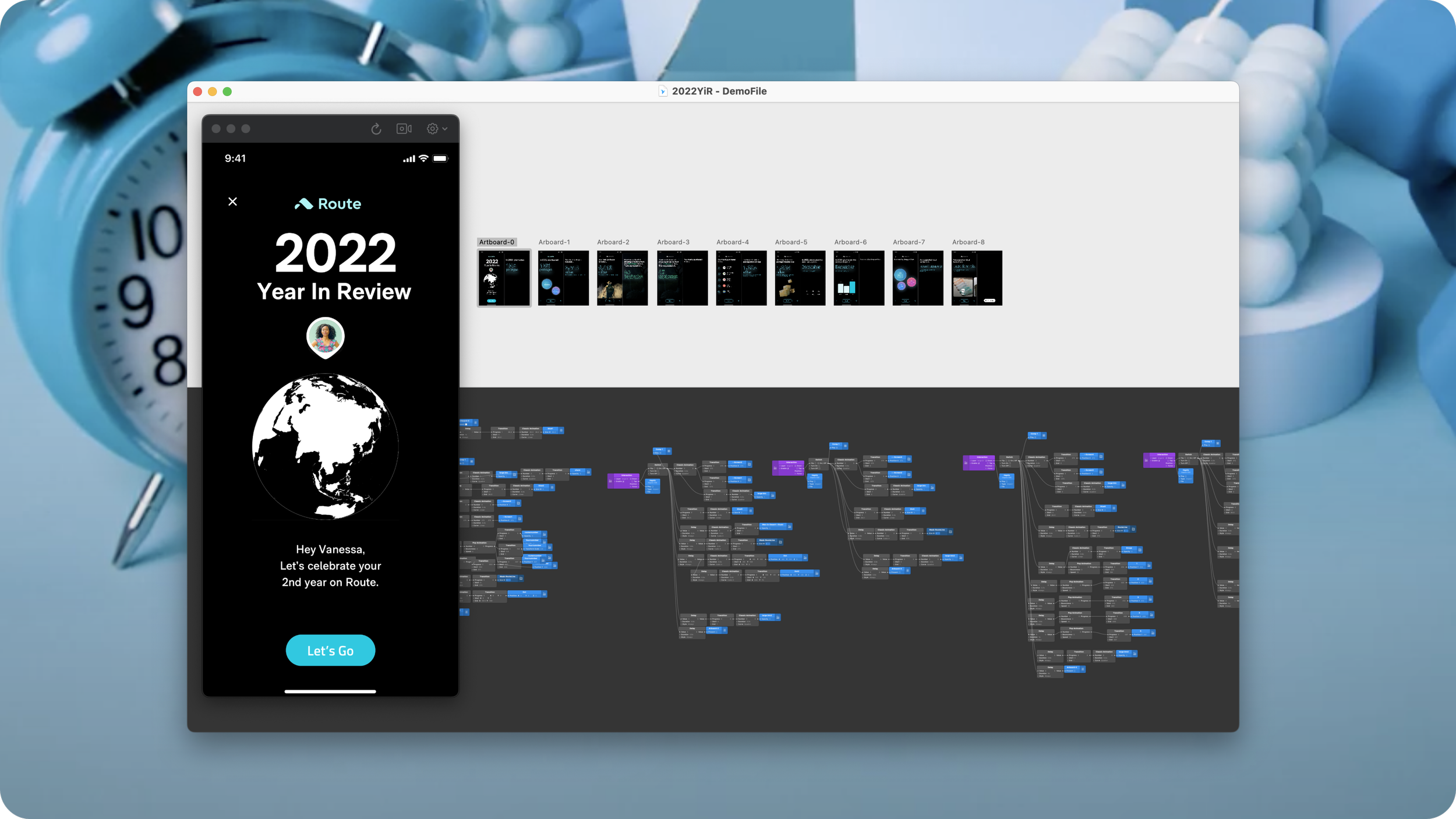
Prototyping & Animation
Every Tuesday for 3 weeks, I brought a working prototype into exec review. I built it in Origami, with gesture control, haptics, and timing tuned to simulate native behavior, all loaded onto a real phone.
This allowed CEO and leadership team to experience it as a product, From the CEO to the users we tested, it was clear, motion design MAKES the product.
Engineering Collaboration
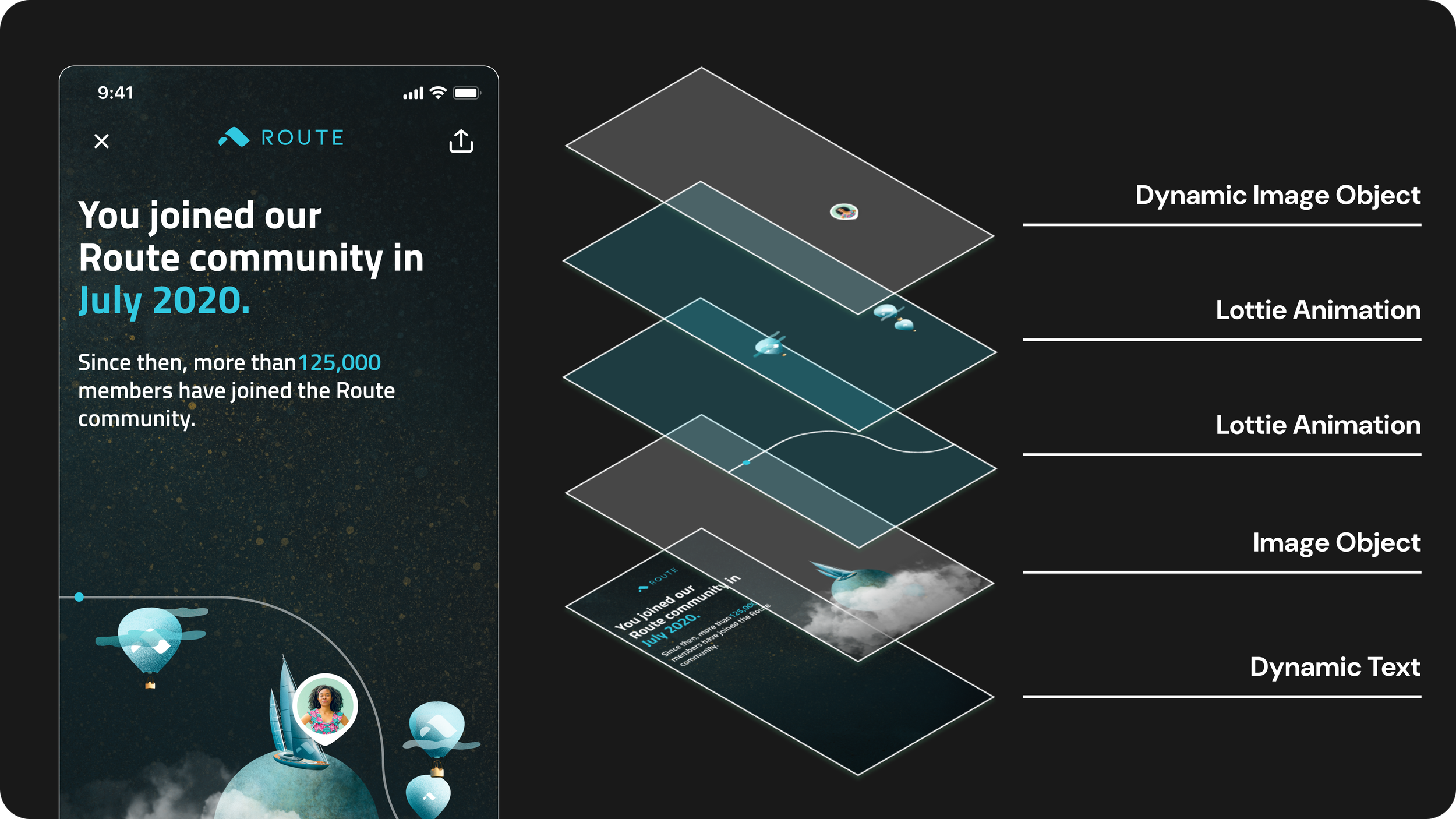
I focused on what makes a good performance with the least engineering effort. I broke down every screen into:
What animation can be a small AfterEffects/Lottie file?
What can be native iOS/Android transitions?
What view and text must be dynamically rendered?
What design can be simplified for a better performance?